
Exploring Gilet Preferences Among UK and Irish Farmers
The National Farm Research Unit, as part of Kynetec, recently conducted a survey to understand the preferences of farmers regarding the popular outerwear item, the gilet.
Reaching out to 1,392 farmers across the UK and Ireland, we posed two simple questions:
“Do you wear a gilet?” and “What brand is it?”
Gilet Usage Among Farmers
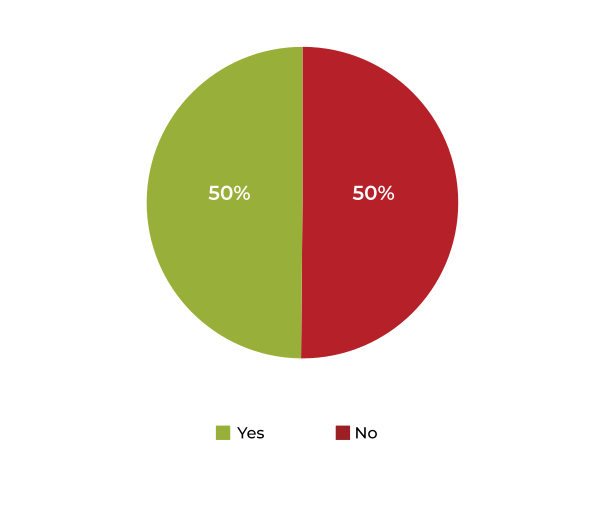
Percentage Of Gilet Wearers
The responses were nearly evenly split, with 698 farmers (50%) indicating they wear a gilet and 694 (50%) stating they do not.
This even division highlights the varied preferences within the farming community regarding this versatile piece of clothing.
Gilet By Brand
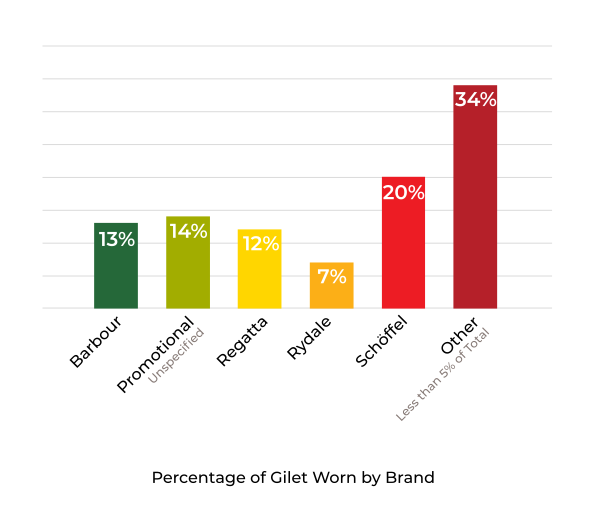
Brand Preferences
When diving into brand preferences, excluding the "Other" category where each brand individually accounted for less than 5% of the total, Schöffel emerged as the most popular gilet brand, representing 20% of the total responses.
This indicates a strong preference for Schöffel's quality and design among farmers who wear gilets.
Percentage Of Arable Gilet Wearers
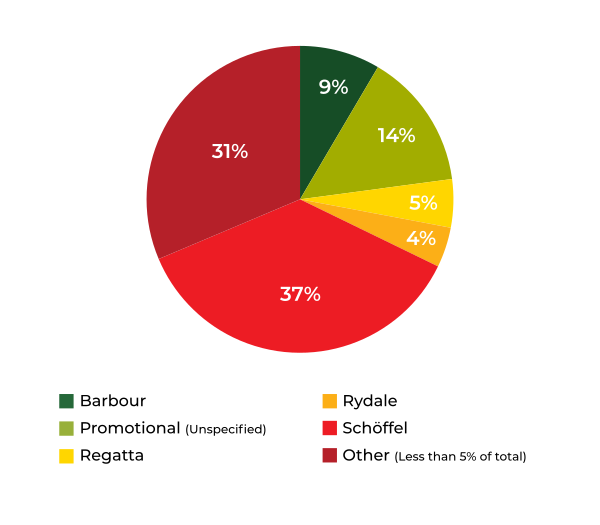
Preferences by Farming Enterprise
Taking a closer look at gilet brand preferences by type of farming enterprise, we observed distinct trends:
Of the 118 arable farmers surveyed, Schöffel was the standout favorite, with 37% of the respondents choosing it as their preferred brand.
This significant preference suggests that arable farmers value the functionality and style offered by Schöffel gilets.
Percentage of Livestock Gilet Wearers
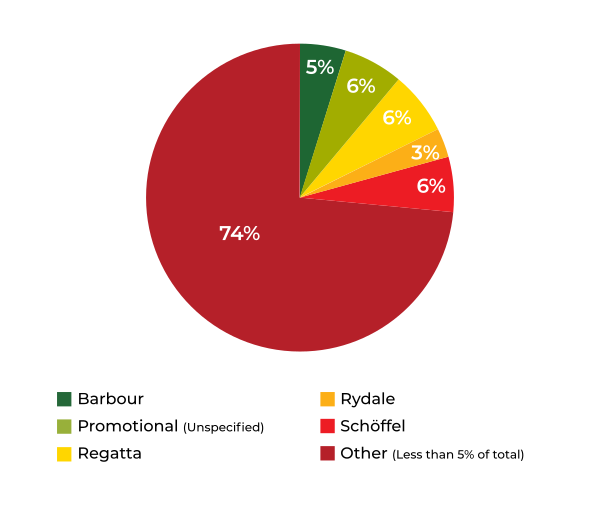
In contrast, the 266 livestock farmers surveyed displayed a much more varied choice of brands. The majority of responses fell into the “Other” category, meaning that each individual brand made up less than 5% of the total responses.
This diversity indicates that livestock farmers have a broader range of preferences and may prioritize different features in their gilets compared to their arable counterparts.
Conclusion
The survey results provide valuable insights into the outerwear preferences of farmers across the UK and Ireland. While gilet usage is evenly split among farmers, those who do wear gilets show a notable preference for the Schöffel brand, particularly among arable farmers. Livestock farmers, on the other hand, exhibit a wider variety of brand choices, reflecting diverse needs and preferences.
Understanding these preferences helps us appreciate the nuances within the farming community and can guide manufacturers and retailers in catering to the specific demands of different farming enterprises. As the farming industry continues to evolve, staying attuned to the needs and preferences of farmers will remain essential in providing them with the best possible products and services.

In today's digital age, social media has become an essential tool for sharing information, connecting communities, and enhancing knowledge across various sectors, including agriculture. To understand how farmers engage with social media, we spoke to 1,367 UK farmers, asking them about their preferred format of agricultural social media content: text, audio, or video.
Social Media Usage Among Farmers
Interestingly, our survey revealed that 58% of UK farmers are non-users of social media, while 42% actively use these platforms. This split indicates that while a significant portion of the farming community remains disengaged from social media, a substantial number are leveraging it for their informational needs.
Preferred Content Formats
Among those who use social media, there is a clear preference for video content. A significant 41% of respondents indicated that they most enjoy consuming agricultural information through videos. This preference for video content highlights the value farmers place on visual and dynamic forms of communication, which can provide detailed demonstrations, tutorials, and updates in an engaging manner.
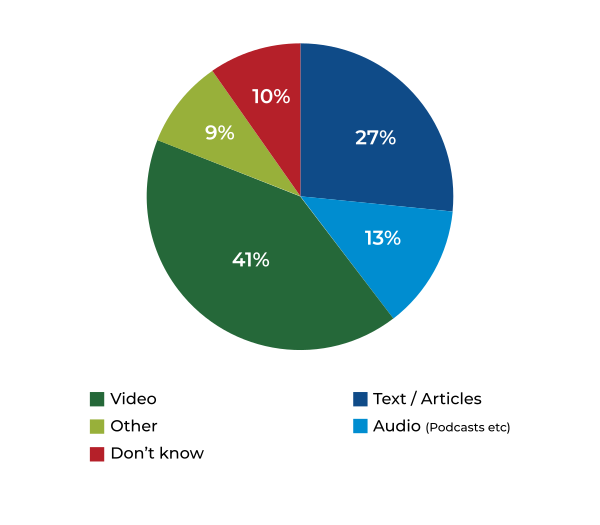
Text-based content, such as articles, is the second most preferred format, with 27% of respondents favouring this medium. Articles offer in-depth analysis, comprehensive guides, and detailed reports, making them a valuable resource for farmers seeking thorough information. While audio content, such as podcasts, did not emerge as the top preference, it is still a notable medium for delivering agricultural information. The flexibility of consuming audio content while performing other tasks can be beneficial for the busy schedules of farmers.
Conclusion
The survey results underscore the importance of diverse content formats to cater to the varying preferences of the farming community. As video content continues to dominate, it is crucial for agricultural organisations, influencers, and educators to produce high-quality, engaging videos that address the needs and interests of farmers. At the same time, maintaining a strong presence of text-based articles ensures that those who prefer detailed written information are well-served.
By understanding and adapting to these preferences, we can enhance communication, knowledge sharing, and community building within the agricultural sector, ultimately supporting the growth and success of farmers across the UK.

Each quarter we would like to take the opportunity to introduce you to one of our fantastic team of interviewers.
This quarter’s spotlight focuses on Hannah
"Working at the National Farm Research Unit has been life altering for me personally; I live in a very rural area surrounded by mountains and farmland and so working here has made me feel more connected to my area, the land and the people who work it. As a team I feel that we are full of passion, care, empathy and understanding. I couldn't ask for a better team to work with, we all bring something to the table in one way or another.”
"In my spare time, I enjoy gardening - of which has been massively helped by speaking to many an arable farmer, cooking and baking with my daughter and drawing. I also enjoy the beautiful countryside by walking the dogs, going on the canoe and travelling mostly around Wales (where I live) and Scotland with my fiancé."
"Ac rydw i'n gallu siarad Gymraeg hefyd!"
National Farm Research Charitable Donations
| Cumulative Donations since Oct 2018 | |
| RABI | £14,063.15 |
| RSABI | £1,765.61 |
| Forage Aid | £9,796.86 |
| Farming Community Network | £6,474.65 |
| Rural Support NI | £687.30 |
| Embrace Farm | 4852.80€ |
RABI - Freephone helpline on 0800 188 4444.
Email at
RSABI - Freephone 0808 1234 555
Forage Aid (Addington Fund) – Helpline 01926 620135
Farming Community Network – Helpline 03000 111 999
email
Rural Support – Helpline 0800 1381 678
Embrace Farm Ireland – Helpline Ireland 085 77 09 966
Our Support for Farmers
Farmers participating in our on-going research studies can gain valuable BASIS and NRoSO points. Simply give your BASIS number to our interviewer when they call to update your record. To claim your NRoSO points please log onto the website and enter code NO471443f
This code is valid for 12 months from the 1st September 2024


We are always pleased to receive your feedback, or if you would like to have your views and opinions heard by taking part in our research projects please email: