Wishing all our UK and Irish farmers & agronomists a very Merry Christmas and a Happy New Year!
Thank you for generously sharing your time, insights, and experiences with the National Farm Research Unit (part of Kynetec) throughout the year. Your contributions are invaluable and help shape a brighter future for agriculture.
May this festive season bring joy to your homes, warmth to your hearts, and well-deserved rest after a year of commitment to the land and animals.
Here’s to a prosperous 2026 filled with growth, innovation, and success across the fields and farms of the UK and Ireland.
With gratitude and festive cheer,
The National Farm Research Unit Team
UK Farmers and Artificial Intelligence: Cautious Optimism Amid Growing Concerns
As agriculture faces increasing pressure to innovate, Artificial Intelligence (AI) is often touted as a game-changer. But how do UK farmers really feel about AI’s role in their industry?
The Pulse Survey UK 2025, conducted among 1,099 farmers, offers a revealing snapshot of attitudes, adoption, and anxieties surrounding AI in farming.
Low Familiarity, Limited Adoption
Despite the hype, AI remains unfamiliar territory for most farmers. Two-thirds (66%) rated their general knowledge of AI tools as very low, while only 7% claimed strong familiarity. Even among those aware of AI, practical application is rare: over half (55%) of farmers who know about agricultural AI tools have never used them, and just 27% report any hands-on experience.
Percentage of AI Knowledge
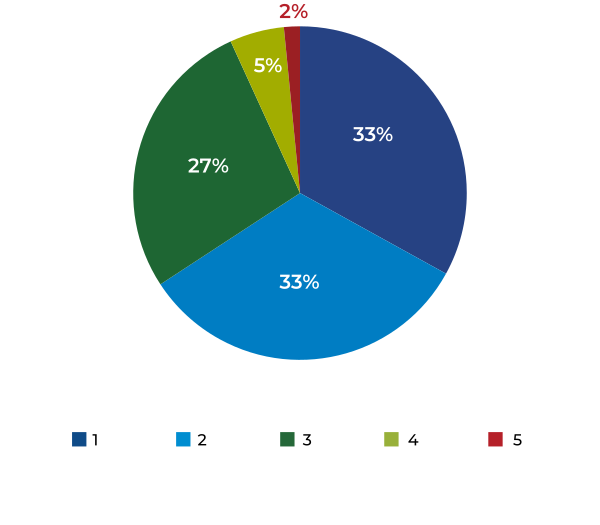
Q1 - On a scale of 1 (Not familiar at all) to 5 (Very familiar), how would you rate your knowledge of Artificial Intelligence (AI) tools in general?
Out of the 1,099 farmers surveyed, (66%) answer 1-2 on the scale indicating that were not familiar with artificial intelligence. Only a small portion (7%) answered on the upper end of the scale (4-5), stating that they were very familiar with AI.
Base – All – 1099
Percentage of Agricultural AI Knowledge
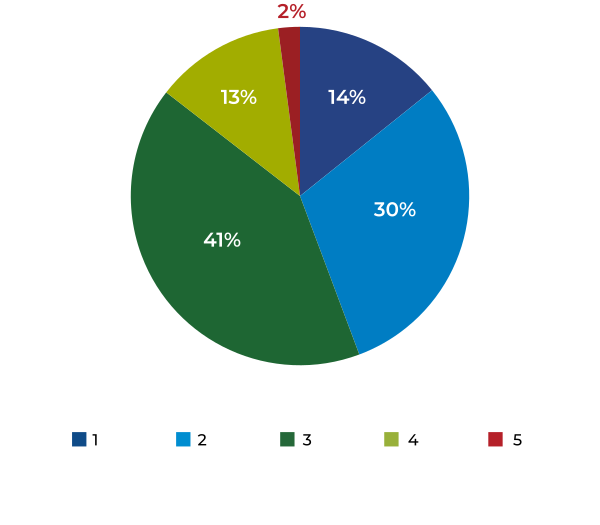
Q2 - On a scale of 1 (Not familiar at all) to 5 (Very familiar), how would you rate your knowledge of Artificial Intelligence (AI) tools in agriculture (e.g., for fertilization optimization, disease forecasting)?
Out of the 376 farmers who in Q1 said they have some familiarity with AI (Q1 = 3-5), the biggest percentage (41%) of those answered neutral (Q2=3) in their knowledge of Artificial intelligence tools in agriculture.
Base – All – 1099 – Active Answer - 376
Percentage of Agricultural AI Used on Farm
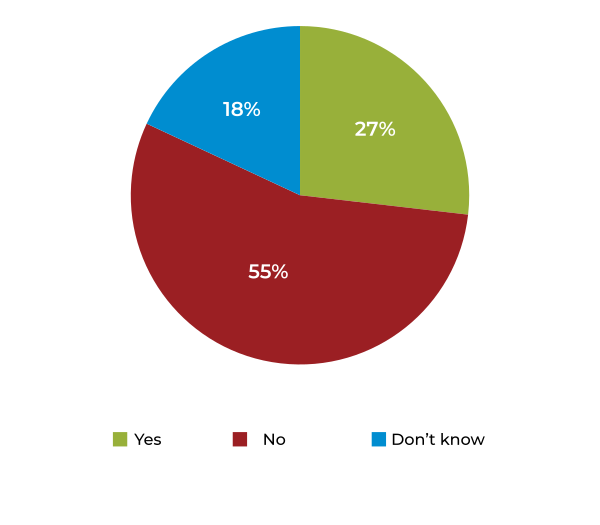
Q3 - Has your farm ever used technology that involved AI (e.g., automated weather data analysis, advisory systems, AI-generated soil fertility maps)?
Out of the 205 farmers who in Q2 said they have some familiarity with Agricultural AI (Q2 = 3-5) , Over half (55%) said they had not used this technology on their farm. (27%) said they had used AI technology on their farms.
Base – All – 1099 – Active Answer - 205
Trust Still Lies with Humans
When it comes to high-risk decisions—such as responding to crop disease outbreaks—farmers overwhelmingly trust human judgment. Among those using AI, 34% prefer their advisor unaided by AI, compared to a mere 4% who would rely solely on AI recommendations. This underscores a persistent skepticism about replacing human expertise with algorithms.
Percentage of Trust using Agricultural AI
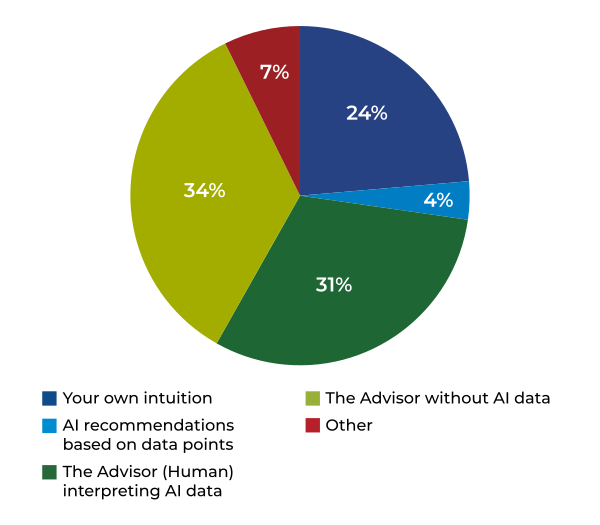
Q4 - In crisis or high-risk situations (e.g., the sudden appearance of a new disease in a field) Who do you ultimately trust more when it comes to making decisions about immediate action?
Out of the 55 farmers who in Q3 said they use AI on their farms (Q3 = YES) , the biggest percentage (34%) said they trust their advisor unaided by AI to deal with high-risk situations. (4%) of respondents said they would solely trust AI alone.
Base – All – 1099 – Active Answer - 55
Percentage of AI Support in Farming Decisions
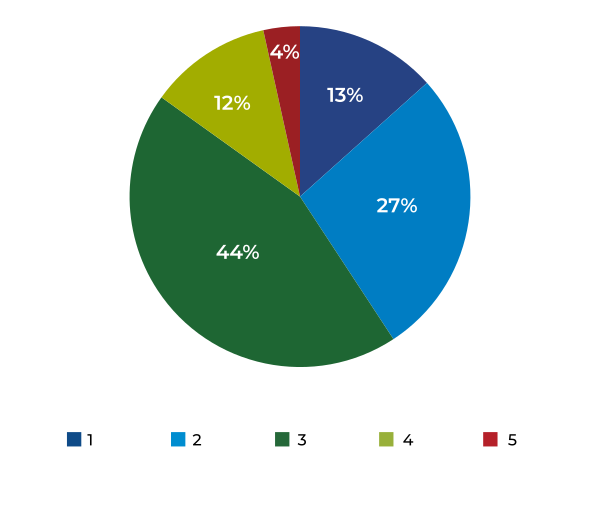
Q6 - On a scale of 1 (Completely unnecessary) to 5 (Very necessary), how do you rate the role of AI in supporting business decisions in farming (e.g., what to plant, when to sell)?
Out of the 1099 farmers, the biggest percentage (44%) of those answered neutral (Q6=3) in the necessity to have AI support their business decision on their farm.
Base – All – 1099
Future Outlook: Fear of Knowledge Erosion
Looking ahead, 35% of farmers believe that if AI becomes the dominant tool in agriculture within five years, it will lead to a significant decline in farmer knowledge and experience. This concern reflects a broader fear of over-reliance on technology at the expense of traditional skills.
Percentage of Future AI Outcomes
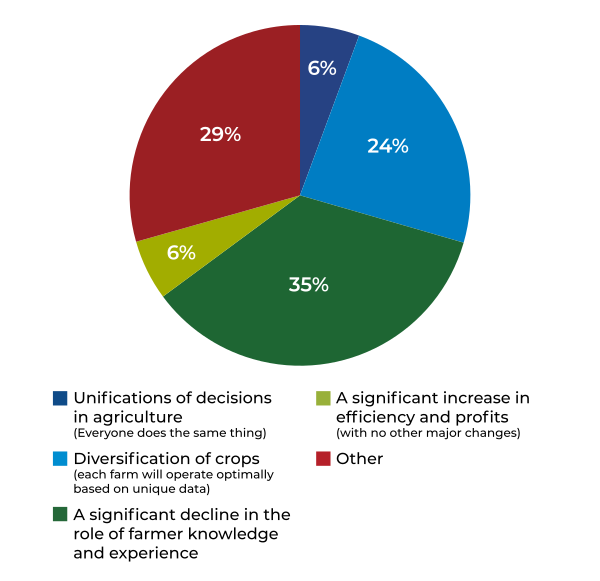
Q7 - Let's assume that in five years, AI will be the main tool in agriculture. Do you think this will lead to:
Out of the 1099 farmers, the biggest percentage (35%) of those believed that if in 5 years AI is the main tool in agriculture, this will lead to a significant decline in farmer knowledge and experience.
Base – All – 1099
Privacy and Interview Concerns
AI’s role in research interviews also raises eyebrows. Over one-third (37%) feel slightly uncomfortable with AI analyzing their statements in real time, and 58% view AI-driven question suggestions as manipulative and intrusive. Farmers clearly value transparency and control in interactions involving AI.
Percentage of Comfortability with AI During an Interview
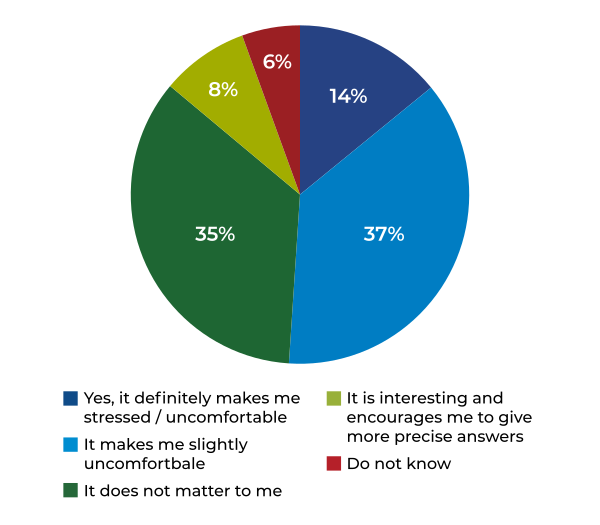
Q8 - During an interview, the research company may use AI tools to rapidly analyze and interpret your statements in real-time. Does this information affect your comfort level or willingness to speak freely?
Out of the 1099 farmers, the biggest percentage (37%) said that it makes them slightly uncomfortable having AI analyze their statements during an interview.
Base – All – 1099
Percentage of Comfortability AI Assisted Conversation
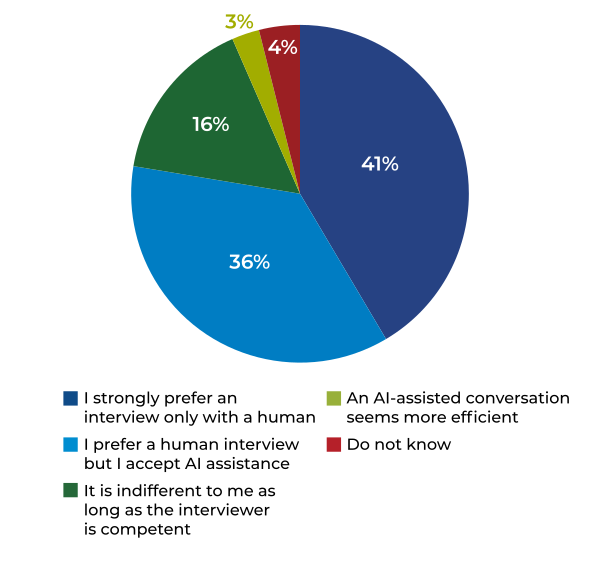
Q9 - Would you prefer the interview to be conducted exclusively by a human, or would you accept a conversation assisted by AI (e.g., AI suggests the next questions to the interviewer based on your previous answers)?
Out of the 1099 farmers, the biggest percentage (41%) said that they strongly prefer and interview with only a human. (3%) of respondents said AI-assisted conversations seem more efficient
Base – All – 1099
Percentage of AI Interview Benefits
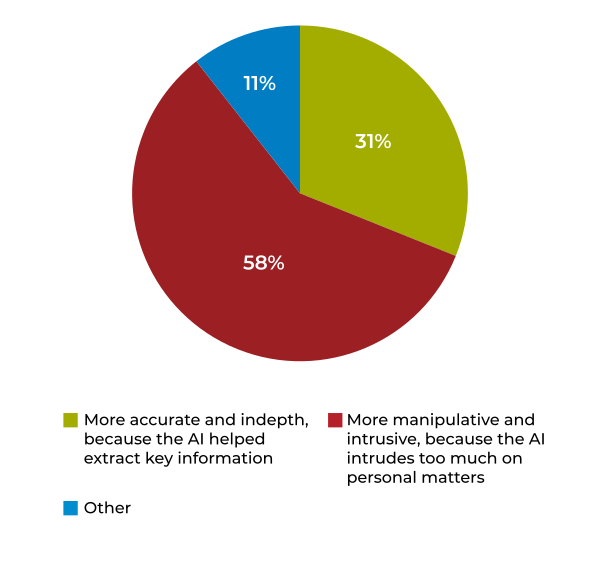
Q10 - If AI analyzed your statements during the interview and suggested to the researcher that he or she should ask more questions about, for example, financing (because the AI detected your strong emotions on this topic): Do you think such an interview would be...
Out of the 1099 farmers, the biggest percentage (58%) said that if AI suggested the researcher asked more questions during an interview it would make the interview process more manipulative and intrusive.
Base – All – 1099
Market Insights and Major Fears
While some farmers acknowledge AI’s potential to uncover trends, 26% believe it offers no advantage over a skilled human analyst. The biggest fear? Loss of human expertise (22%), followed by worries about data privacy, overly generic conclusions, and market manipulation.
Percentage of AI Benefit in Market Trends
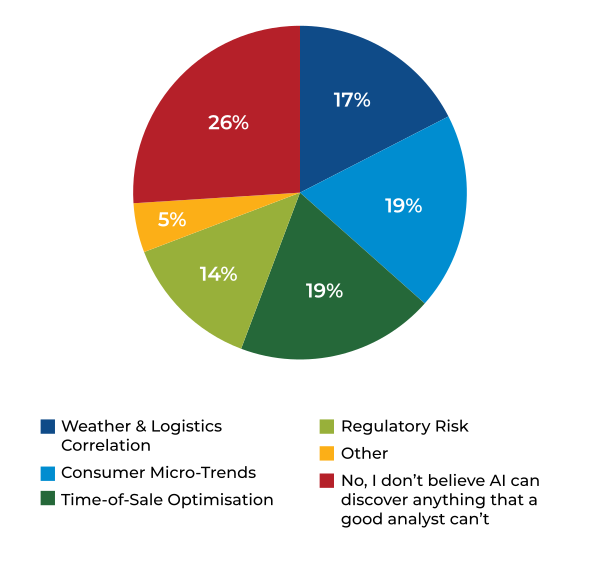
Q11 - Do you believe AI can help discover market trends that a human analyst might miss? If so, in what area?
(Multiple Section Available)
The answers here are balanced across the majority outcomes. The biggest percentage (26%) given was stating that farmers do not believe AI can discover anything a good analyst can't.
Base – All – 1099
Percentage of AI Biggest Fears
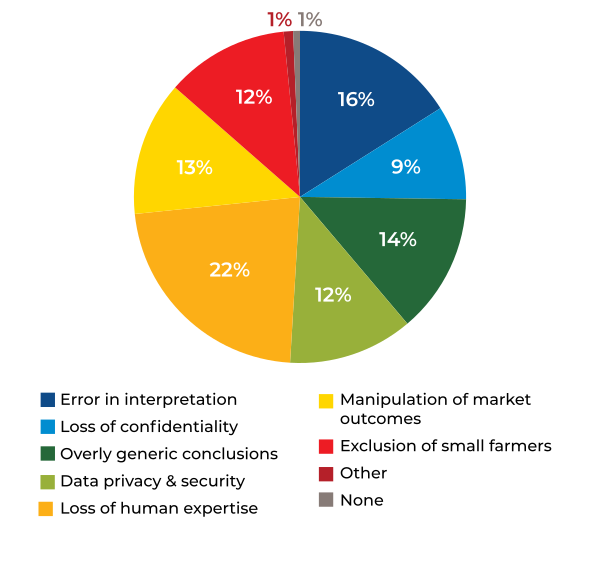
Q12 - What is your biggest fear regarding the use of AI to analyze farmers' opinions for market insights?
(Multiple Section Available)
The outcomes were predominantly split across all concerns. The biggest concern (22%) was the loss of human expertise. Only (4%) of respondent said they did not have any fears in using AI for market insights.
Base – All – 1099
What Does This Mean for the Future?
The survey paints a picture of cautious optimism tempered by deep-seated concerns. Farmers recognize AI’s promise but remain wary of its implications for autonomy, privacy, and the erosion of hard-earned knowledge. For technology providers and policymakers, the message is clear: adoption will depend not just on functionality, but on trust, transparency, and respect for the human element in farming.
Each quarter we would like to take the opportunity to introduce you to one of our fantastic team of interviewers. This quarter’s spotlight focuses on Hannah

Why I enjoy speaking to farmers
I enjoy speaking to farmers because I learn a lot about their struggles and difficulties and farming in general. Every day is a learning day. As I have not come from a farming background, I have found this very beneficial for me to be able to fulfil my role. It is enlightening to hear all the good parts of farming and the bad as this truly paints the best picture of farming today.
What is it like working at NFRU
Working for the NFRU has been the best thing for me on a personal note as I am a single mum and finding work to fit in with school times was difficult but working for the NFRU has given me the opportunity to go back to work and give me my life back. I work with a fantastic group of people, who all have different personalities and strengths, even though I work from home I do not feel alone as there will always be someone to help should I need it.
About me
When I am not working, I enjoy spending time with my daughter and family, walking, reading and listening to music and at times have a boogie too.
National Farm Research Charitable Donations
| Cumulative Donations since Oct 2018 | |
| RABI | £14,356.85 |
| RSABI | £1,809.01 |
| Forage Aid | £10,017.56 |
| Farming Community Network | £6,695.35 |
| Rural Support NI | £712.70 |
| Embrace Farm | 4922.10€ |
RABI - Freephone helpline on 0800 188 4444.
Email at
RSABI - Freephone 0808 1234 555
Forage Aid (Addington Fund) – Helpline 01926 620135
Farming Community Network – Helpline 03000 111 999
email
Rural Support – Helpline 0800 1381 678
Embrace Farm Ireland – Helpline Ireland 085 77 09 966
Our Support for Farmers
Farmers participating in our on-going research studies can gain valuable BASIS and NRoSO points. Simply give your BASIS number to our interviewer when they call to update your record. To claim your NRoSO points please log onto the website and enter code NO471443f
This code is valid for 12 months from the 1st September 2025


We are always pleased to receive your feedback, or if you would like to have your views and opinions heard by taking part in our research projects please email: